Other Conditions Treated

Superior Mesenteric Artery (SMA) Syndrome

Comprehensive overview of Superior Mesenteric Artery (SMA) Syndrome, including its pathophysiology, epidemiology, diagnostic imaging criteria, and management strategies.

Upper Gastrointestinal Conditions

Your upper GI tract includes the oesophagus (food pipe), stomach, duodenum, and gallbladder. Problems in these areas can cause: Heartburn or acid reflux, Pain in your chest or upper abdomen, Difficulty swallowing, Bloating, nausea, or vomiting, Unexplained weight loss

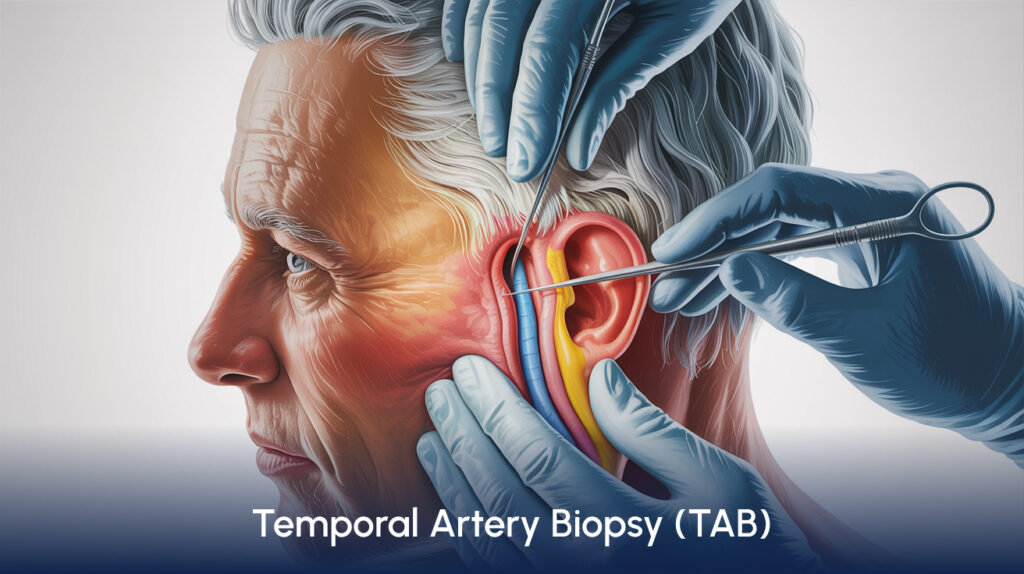
Temporal Artery Biopsy (TAB)

If your doctor suspects giant cell arteritis (GCA) — also known as temporal arteritis — one of the key tests may be a temporal artery biopsy (TAB). This is a minor surgical procedure where a small section of the artery at your temple is removed and examined under the microscope.

Lumps Beneath the Skin

Finding a lump under the skin is very common. Most are harmless, but it’s natural to feel anxious when you notice one. Lumps may arise from simple, benign conditions such as epidermoid cysts or lipomas, or from lymph nodes reacting to infection.

Upper Gastrointestinal Endoscopy (Gastroscopy)

A gastroscopy uses a thin, flexible tube with a camera to look directly at your oesophagus (food pipe), stomach, and the first part of the small intestine (duodenum).

Laparoscopic Appendicectomy

Appendicitis is inflammation of the appendix, a small pouch attached to the large intestine. Typical symptoms include: Abdominal pain (often starting near the navel, then moving to the lower right side), Loss of appetite, nausea, or vomiting, Fever and tenderness in the right lower abdomen

Superior Mesenteric Artery (SMA) Syndrome

Comprehensive overview of Superior Mesenteric Artery (SMA) Syndrome, including its pathophysiology, epidemiology, diagnostic imaging criteria, and management strategies.

Upper Gastrointestinal Conditions

Your upper GI tract includes the oesophagus (food pipe), stomach, duodenum, and gallbladder. Problems in these areas can cause: Heartburn or acid reflux, Pain in your chest or upper abdomen, Difficulty swallowing, Bloating, nausea, or vomiting, Unexplained weight loss

Temporal Artery Biopsy (TAB)

If your doctor suspects giant cell arteritis (GCA) — also known as temporal arteritis — one of the key tests may be a temporal artery biopsy (TAB). This is a minor surgical procedure where a small section of the artery at your temple is removed and examined under the microscope.

Lumps Beneath the Skin

Finding a lump under the skin is very common. Most are harmless, but it’s natural to feel anxious when you notice one. Lumps may arise from simple, benign conditions such as epidermoid cysts or lipomas, or from lymph nodes reacting to infection.

Upper Gastrointestinal Endoscopy (Gastroscopy)

A gastroscopy uses a thin, flexible tube with a camera to look directly at your oesophagus (food pipe), stomach, and the first part of the small intestine (duodenum).

Laparoscopic Appendicectomy

Appendicitis is inflammation of the appendix, a small pouch attached to the large intestine. Typical symptoms include: Abdominal pain (often starting near the navel, then moving to the lower right side), Loss of appetite, nausea, or vomiting, Fever and tenderness in the right lower abdomen

Abscess – Incision & Drainage

An abscess is a painful collection of pus caused by infection. Left untreated, it can enlarge, spread, and make you feel unwell. The most effective treatment is a minor procedure called incision and drainage (I&D).

Abdominal & Upper GI Surgery

Reflux disease and paraoesophageal hernias can cause persistent heartburn, pain, and difficulty swallowing. Surgery corrects the problem at its source by restoring normal anatomy.

Abdominal Pain

Abdominal pain is common — and in most cases, it isn’t caused by anything serious. But some causes do require urgent surgical assessment.